
// shielding gas setup
Welding gas and regulators: choose the complete gas path.
Good shielding depends on the gas, cylinder connection, regulator, hose, torch and the air around the weld. Match the complete system and you prevent porosity, unstable arcs and an expensive cylinder emptying between jobs.
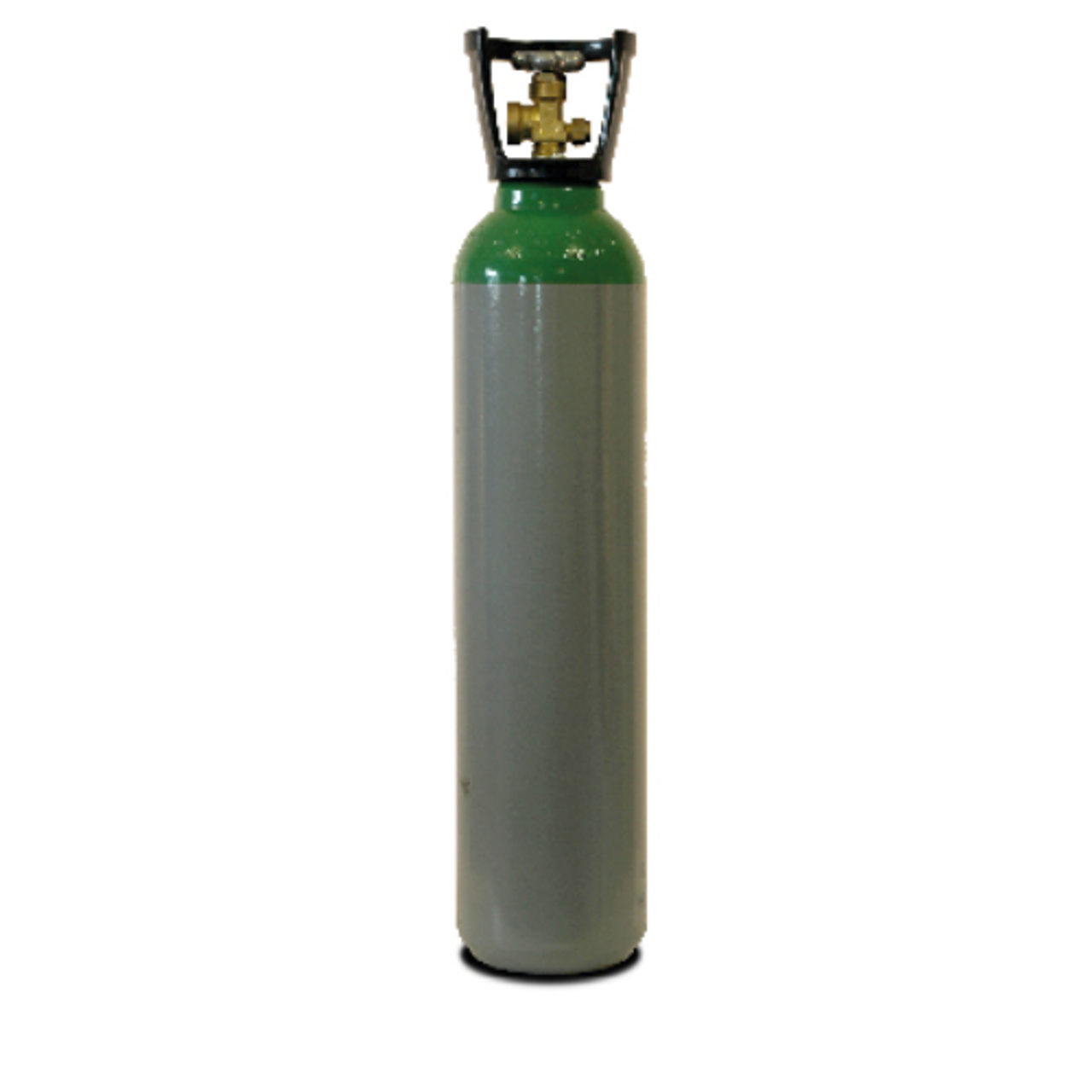
Choose gas by process and material
| Work | Usual starting point | What to check |
|---|---|---|
| MIG/MAG mild steel | Argon-rich argon/CO2 blend | Blend affects arc behaviour, penetration and spatter |
| MIG aluminium | Pure argon | Correct aluminium wire, liner/torch setup and drive rollers |
| TIG steel, stainless or aluminium | Pure argon | Procedure, material and torch flow requirements |
| Gasless flux-core | No external shielding bottle | Correct polarity and wire specification |
These are workshop starting points, not welding procedure specifications. Qualified work and specialist alloys can require a defined gas composition. Follow the consumable, machine and procedure information for the job.
Regulator, flowmeter or flow gauge?
A regulator reduces high cylinder pressure to a controlled outlet. A two-gauge regulator commonly displays cylinder contents pressure and outlet pressure or an indicated flow scale. A flowmeter uses a floating ball in a calibrated tube and is read with gas flowing; it can make adjustment easy at the point of use.
Buy by gas service, inlet connection, maximum inlet pressure and the required outlet/flow range—not by appearance. Oxygen, fuel gas and inert shielding-gas equipment are not interchangeable. Confirm the cylinder valve and supplier connection before ordering.
How much flow?
Start with the machine, torch or consumable recommendation. For ordinary indoor MIG or TIG work, settings around 10–15 litres per minute are common, but torch size, cup or shroud, joint, current and work environment all matter. More flow is not automatically safer: excessive flow can create turbulence and pull surrounding air into the shielding envelope.
Set flow while gas is actually passing through the torch. If the machine has a gas-test function, use it. Otherwise trigger the gas according to the machine instructions without striking an arc.
Leak-check the whole system
- Secure the cylinder upright and remove the valve cap only when ready.
- Check mating faces and seals are clean and undamaged; never use oil or grease on oxygen equipment.
- Fit the correct regulator without improvised adaptors.
- Pressurise slowly while standing clear of the regulator face.
- Use a suitable leak-detection fluid on connections; never use a flame.
- Check the hose, solenoid, torch connection, diffuser and O-rings.
- Close the cylinder valve after work and release downstream pressure as the equipment instructions require.
Why a weld can still be porous
- Draught: open doors, fans or outdoor wind can strip the gas away.
- Wrong flow: too little gives incomplete coverage; too much can cause turbulence.
- Leak or restriction: damaged hose, loose connection, blocked diffuser or a shroud packed with spatter.
- Long stick-out or poor torch angle: moves the gas outlet away from the pool.
- Contamination: rust, oil, paint, moisture and dirty filler can create gas in the weld.
- Wrong gas: the cylinder or mix does not suit the process/material.
Confined spaces are a separate high-risk problem. Argon and other shielding gases can displace oxygen. HSE guidance says welding with asphyxiant gases in confined spaces should be avoided where possible and requires planned controls and rescue arrangements where essential. See the HSE asphyxiation guidance.
Choose cylinder size by real usage
Small cylinders are easier to move but can be poor value for regular work and run out at inconvenient moments. Larger cylinders reduce changeovers but need suitable storage and handling. Estimate arc hours, typical flow and how often the machine runs, then compare rental, refill and collection arrangements—not only the first-cylinder price.
Compressed-gas cylinders are collection-only from our Andover trade counter. Secure them upright for transport, protect the valve and follow the cylinder supplier's storage and handling instructions.
Match the cylinder, regulator and torch
Bring the cylinder/gas details, machine and process. We can help identify a compatible setup and the hose, fittings and flow control it needs.
Keep reading
Compare MIG, TIG and MMA, then follow the MIG setup sequence or choose helmet and fume protection.